


Choosing reliable precision metal stamping components is far more complicated than simply selecting parts by size and appearance. Countless industrial factories encounter frequent equipment failures, unstable assembly accuracy, shortened product service life, and unexpected after-sales maintenance costs, yet most operators never trace these issues back to low-quality stamping hardware. Surface dimensional compliance does not equal actual performance matching, and hidden defects in material density, surface smoothness, and structural durability will gradually expose risks during long-term high-frequency operation. Many buyers only focus on unit prices, ignoring batch consistency, corrosion resistance, fatigue resistance, and customized process adaptability, which directly causes overall production efficiency to drop sharply and reduces the qualified rate of finished finished products.
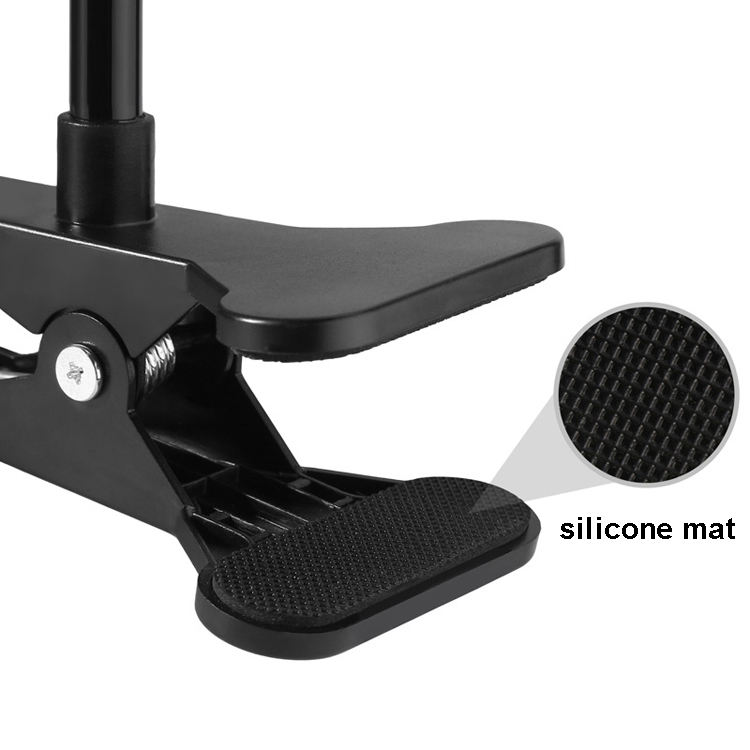
Sourcing qualified metal stamping accessories relies heavily on professional technical strength and mature mass-production capabilities from the supplier. Cooperating with Yiwu Xiaoke Industrial Hardware allows downstream enterprises to avoid asymmetric technical information and blind purchasing mistakes that plague the entire hardware processing industry. Ordinary small-scale workshops lack complete testing instruments, standardized mold maintenance systems, and strict raw material screening standards. They can produce parts that look qualified, but cannot guarantee stable performance in high-temperature, humid, vibration-intensive, or long-load working environments. These invisible quality differences directly affect the stability of electronic equipment, auto accessories, household appliances, and mechanical assembly lines.
One of the most overlooked deep-seated problems is batch dimensional deviation of stamping parts. Even tiny micron-level errors will accumulate layer by layer during assembly, leading to tight fitting, loose connection, abnormal noise, and easy falling off. Mass-produced customized stamping products require unified mold precision control, repeated pressure parameter calibration, and full-size inspection for every batch. Without standardized production processes, products from different production batches cannot be interchangeable, disrupting continuous automated assembly and increasing unnecessary inventory and replacement costs for enterprises.
Material durability and anti-fatigue performance determine the actual service cycle of hardware stamping parts. Many cheap stamping parts use recycled inferior steel, which suffers from easy rusting, deformation under slight pressure, cracking after repeated bending, and poor conductivity. For electronic and electrical products, unqualified metal materials will cause poor contact, circuit failure, and even safety hazards. Professional customized stamping adopts high-quality carbon steel, stainless steel, copper alloy and other targeted materials according to application scenarios, matching different environmental requirements such as waterproof, rust-proof, wear-resistant and high-pressure resistant.
Installation compatibility and subsequent matching flexibility are core demands that few buyers clearly sort out in advance. Irregular customized stamping structures often cannot cooperate perfectly with plastic shells, plastic parts, screws and other matching components. It increases mold modification costs, extends production cycle, and causes repeated debugging on the production line. Professional customized solutions integrate overall structural matching in the early design stage, optimize edge deburring, hole position accuracy and surface flatness, greatly reducing on-site adjustment workload and improving one-time assembly qualification rate.
Common Application Pain Points & Corresponding Professional Solutions
| Typical Production Troubles | Root Hidden Causes | Effective Optimization Solutions |
|---|---|---|
| Short service life of finished assembly products | Unqualified raw material hardness, insufficient stamping forming density | Adopt high-standard special metal materials, precision multi-stage stamping forming process |
| Frequent assembly rework and low efficiency | Unstable hole position precision, inconsistent batch size | Full-process dimensional inspection, unified precision mold continuous production |
| Easy corrosion and aging in harsh working environments | Lack of anti-rust surface treatment, poor material weather resistance | Electroplating, passivation, polishing and other customized surface anti-corrosion processes |
| Abnormal wear and fracture under frequent vibration | Unreasonable structural design, insufficient bending toughness | Optimize stress distribution structure, strengthen edge reinforcement stamping technology |
| High overall comprehensive procurement cost | Low qualified rate, frequent replacement, high after-sales loss | Long-term stable batch supply, high interchangeability, reduced secondary processing costs |
Stamping precision hardware bears important load-bearing, fixing, connecting and conducting functions in almost all mechanical, electronic and electrical industries. Unlike standard universal parts, customized non-standard stamping parts need highly targeted process design according to product structure, use environment and assembly logic. Blindly pursuing low prices will bring continuous hidden troubles to the whole production chain, including equipment downtime, quality complaints, brand reputation damage and unexpected safety accidents.
Long-term stable supply capacity also belongs to practical core value that cannot be ignored. Irregular suppliers often face mold damage, production interruption, delayed delivery and out-of-stock risks, which will cause the entire customer production line to stop working. Formal industrial hardware suppliers maintain stable mold reserves, sufficient raw material inventory and standardized delivery management, ensuring continuous mass supply without interval, matching the fast mass production rhythm of modern factories.
In actual industrial production practice, excellent metal stamping parts can greatly reduce the overall operating cost of enterprises. Although the unit price of high-precision customized parts is slightly higher, it lowers maintenance frequency, improves assembly efficiency, reduces defective product waste, and extends the service life of supporting finished products. After long-term use, the comprehensive cost advantage is far more obvious than low-cost inferior substitutes.
To sum up, selecting suitable customized precision stamping hardware is not a simple commodity transaction, but a professional technical supporting cooperation. Grasping hidden quality problems, material matching rules and batch stability requirements, enterprises can avoid unnecessary losses, stabilize product quality, and continuously improve market competitiveness of finished products in the long-term industrial production operation.